Twitter Twitter Instagram Ashley Jackson

Twitter

Blog

Ground works commence on second installation of Frame

photo (3) - Copy

Here I am at Hardcastle Crags on a stunning morning as the ground is marked and prepared for the installation of the second Framing the Landscape frame – the launch date is soon to be unveiled so do keep checking back on the website, or join us on facebook and twitter to get the news first

Have you created your own work of art through the frame

Framingthelandscape (withwatermark) (1 of 1) - Copy

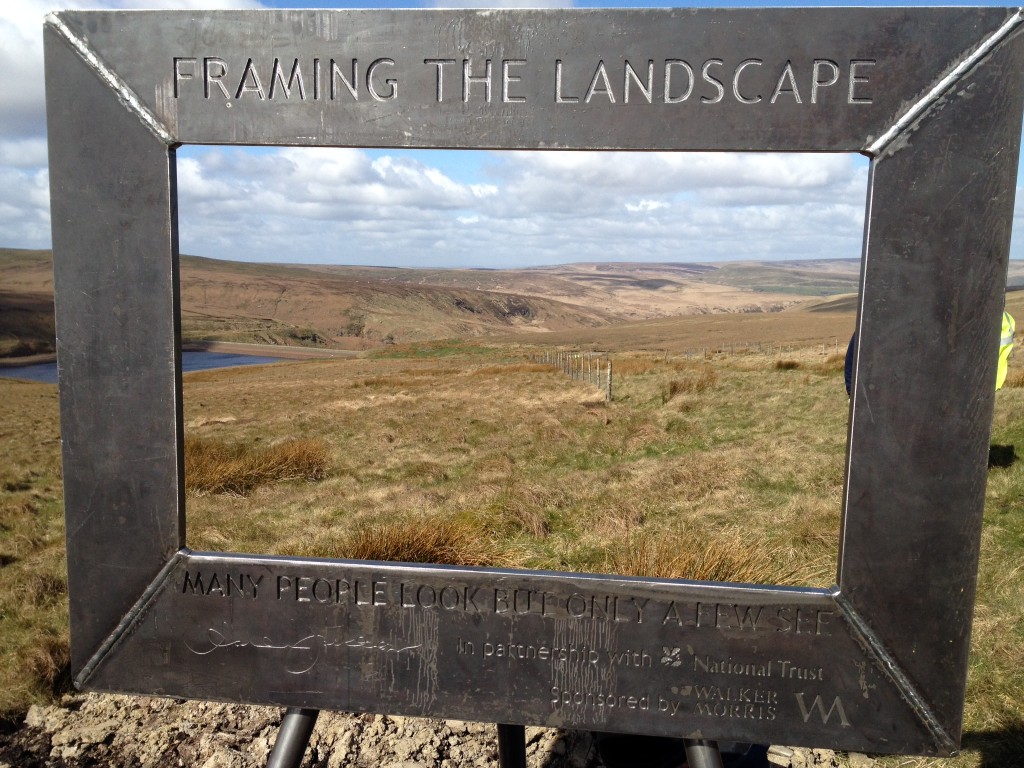
Take a look at this fantastic photograph by Dave Zdanowicz, the landscape doesn’t get much better than this ….

Launch of first frame at Wessenden Moor

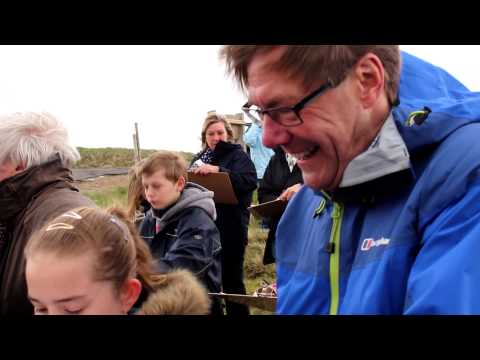
Here is a brief video giving a taster of the launch day with children and teachers from Yorkshire schools capturing the view through the frame and connecting with nature through art. The finished artwork can be seen on the Gallery page.

We hope that others will find their way of contributing to the project either through twitter ‘selfies’, photographs, sketches or paintings, the frame is intended to focus the eye on to the landscape, what each of us then sees is unique and individual.

The greatest  achievement from the project will be that not only will people have gone out in to the great outdoors but perhaps they will start to view other landscapes differently as they start to “frame the landscapes” around them seeing things they have never given time to before.

Are you in the frame?

photo

Visit Marsden Moor and put yourself in the frame.

You can do this by either taking a photograph of you in the frame and visit us on twitter @framinglandsc or facebook Framing the Landscape or be creative and send your artwork of your vision through the frame to info@framingthelandscape.co.uk and look out for it in the gallery section of the website. Please send jpg files of less than 2MB and the final decision is with the website as to appropriate content of image as to whether it will be exhibited.

Installation on the Moor


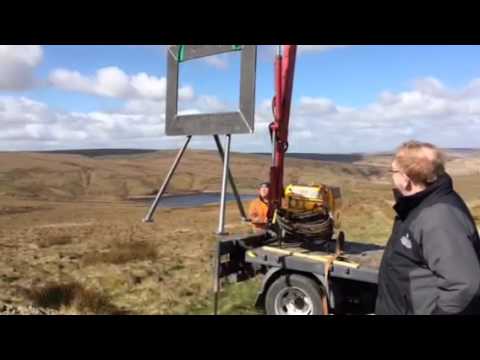
As the phrase goes,”Many hands make light work” well it wouldn’t have been possible to install the first frame on Marsden Moor without a crane attached to the transport vehicle. Hoisted into place and then lowered the frame was installed. Final work included placing screws through the flanges and soldering them in to place. The unearthed surrounding ground was then moved manually back into place and the first frame was installed. From paper to installation the first frame is now in place at Wessenden Head, Marsden Moor.

Inscription of the Frame

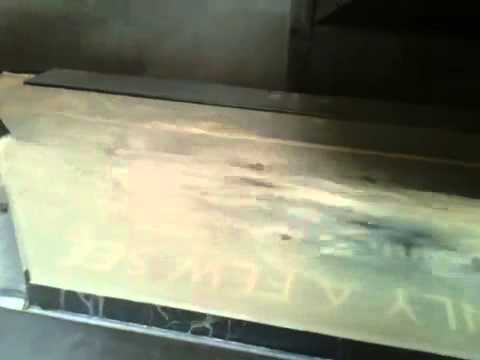
This is a shortened video of the last minutes of the inscription process that took over 15 hours at Sanderson Precision Engineering.Every curve and line inscribed by the machine was first calculated and programmed by the University of Huddersfield.Seeing it full size and on the steel frame was a proud moment for us all.  The project was becoming real rather than an idea or drawing, it was something more tangible

Construction of full size frame


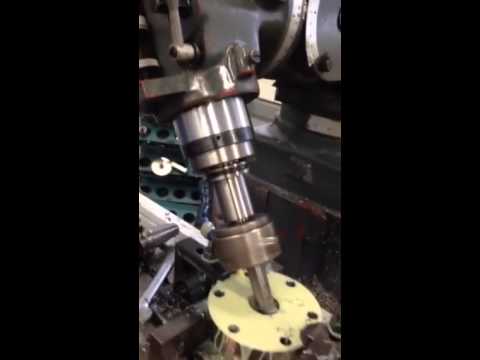
This video created by the University of Huddersfield shows the process by which the flanges, the metal discs that secure the base of the frame to a secure underground support frame are constructed.

The video clip shows the machining of a 50mm diameter hole in one of the front flanges to form the two front feet of the stand. The leg meets the flange at a compound angle of 24.32 degrees which was carried out on a universal milling machine with its head tilted in two directions, fifteen and twenty degrees. A flat was machined using a slot drill then followed with a centre drill, drill and finished using an adjustable boring tool. The final operation was to drill six bolt holes on a pitch circle diameter of 126mm. – Dennis Town BSc(Hons) MSc, Technical Services Manager University of Huddersfield

‘It’s good to see the end product too as so often in my previous jobs, especially when working in industry, one never sees the component that has been made assembled or doing what it’s supposed to do. If you can imagine making the flanges and then not ever seeing them again, that’s how 95% of a sub-contract engineer’s life is, so it was great to be involved in the installation of the frame, I enjoyed it’. Senior Technician Steve Goldstein  – University of Huddersfield

The Prototype

PrototypeOneThirdSize

The first stage in any engineering construction is a prototype. This is the first time you get a feel for how the frame will look,even though at this stage it is a third of the size of the full scale frame that will eventually be constructed. This allows the engineers to work through any problems be they design or construction based. We are thankful to Huddersfield University, Professor Donnelly, Dennis Town,Richard Bailey and Steve Goldstein for all their assistance in this process.

Stage 2

AJ-Engraved-Signature
After the drawing stage is the construction and this would not have been possible without the assistance of the School of Computing and Engineering, University of Huddersfield.

How does a sketch become reality … with great mathematical minds, for not only does the frame need to be aesthetically pleasing to the eye but it also needs to withstand the elements and be safely secure within the landscape.

Take a look at the photograph of the piece of metal with my name inscribed on it, you would think it would be easy enough to trace my signature but there is no programme for a machine to do this. My signature has infact been turned into a mathematical equation, every curve and straight line has been calculated by a human being and then programmed in to the machine to cut into the metal.

This makes this piece of metal more precious than ever when you understand the effort that has been required to produce the signature it contains.

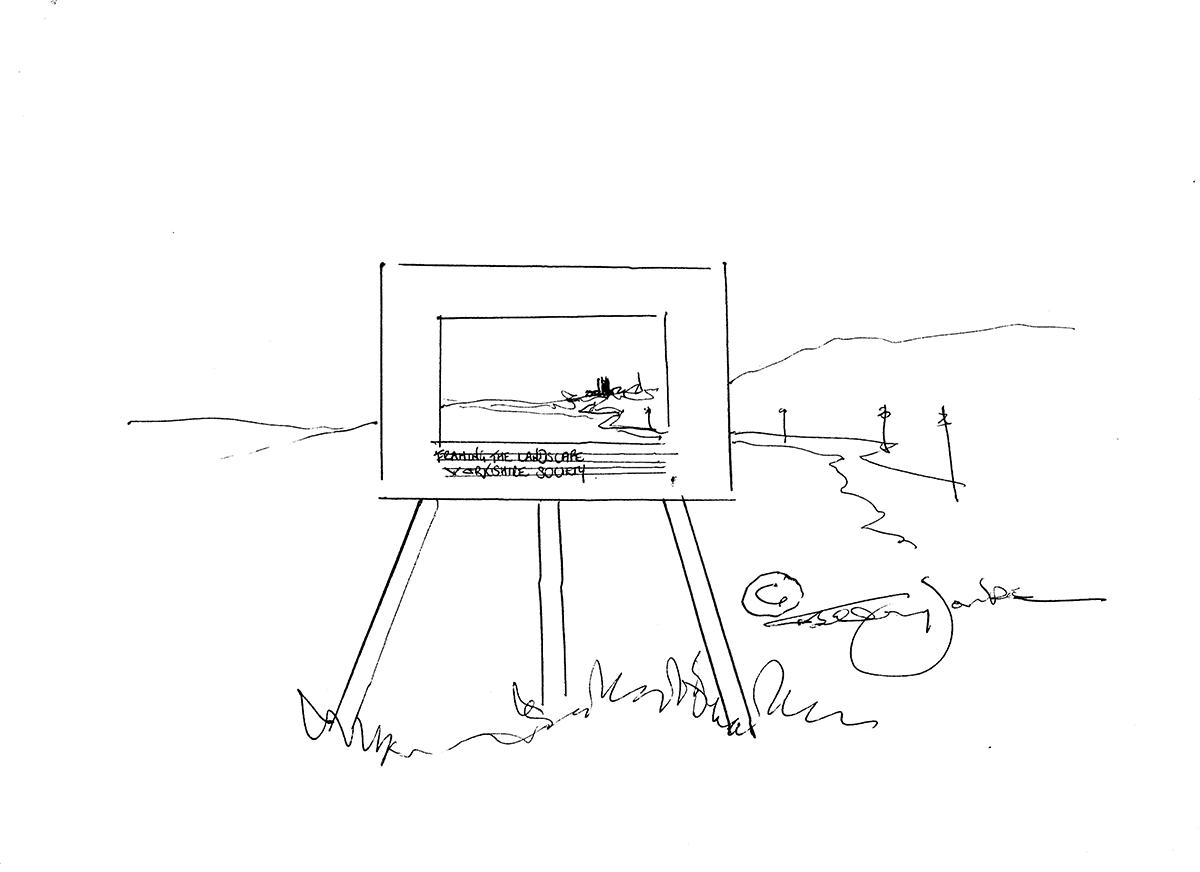
It all starts with a piece of paper and a pencil

Ashley-Jackson-original-sketch-for-installation
As with starting a painting, the idea for Framing the Landscape was constructed in exactly the same way .. with paper, pencil and an idea.

In this day and age of technology it is often hard for others to comprehend that everything constructed by man has first had to be drawn by hand, whether it be a car, table or clothes. Someone has placed that thought to paper making the idea feel real and tangable.

To be inspired further take a look at the working sketches of Leonardo da Vinci many of his spectacular designs were ahead of his time and 21st Century construction of these show that many of them would have worked. The parachute and ornithopter were two of the flying machines concocted by da Vinci in his notebooks. Others include a glider and his helicopter-like aerial screw.

Thus I would like to suggest that at the basis of all creativity, whether it be design, computing, engineering or architecture is the skill of drawing.